San Jose Diridon construction Oct. 19 - Dec. Follow posted signs and check monitors for track assignment changes. More info.
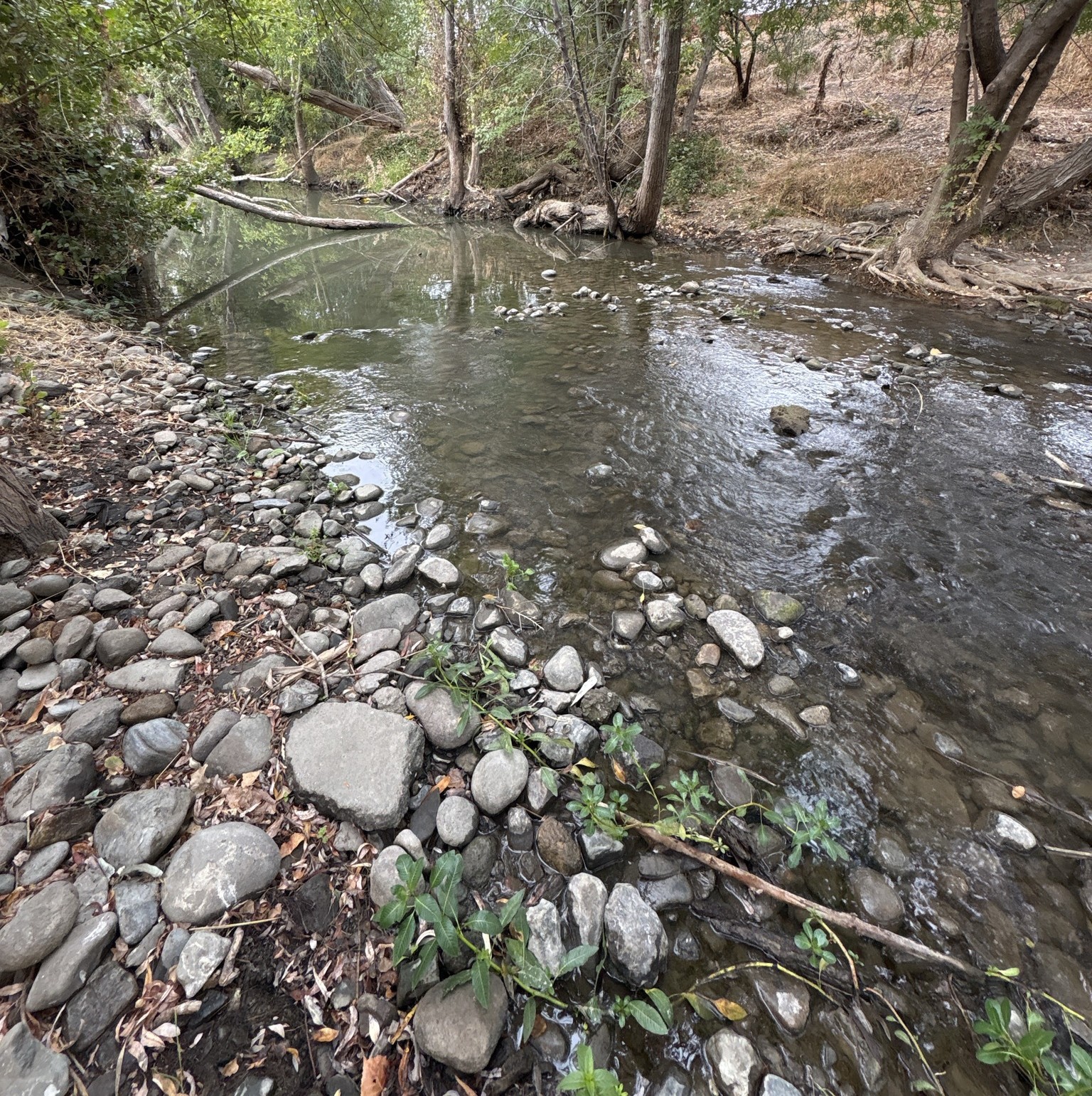
The Guadalupe River is the location of seasonal migratory fish runs for fall/late-fall Central Valley Chinook salmon and Central California Coast steelhead trout, and in some areas provides habitat for the western pond turtle, the California red-legged frog and a range of birds including swallows, great egrets, snowy egrets and black phoebes. The steelhead and the red-legged frog are federally listed as threatened species, while the pond turtles are considered a species of special concern by the State of California. Caltrain prides itself in being a good neighbor, and when it came time to repair the bridges, we got to work making sure that the fish, turtles, frogs, bats and birds would have an improved environment to return to.
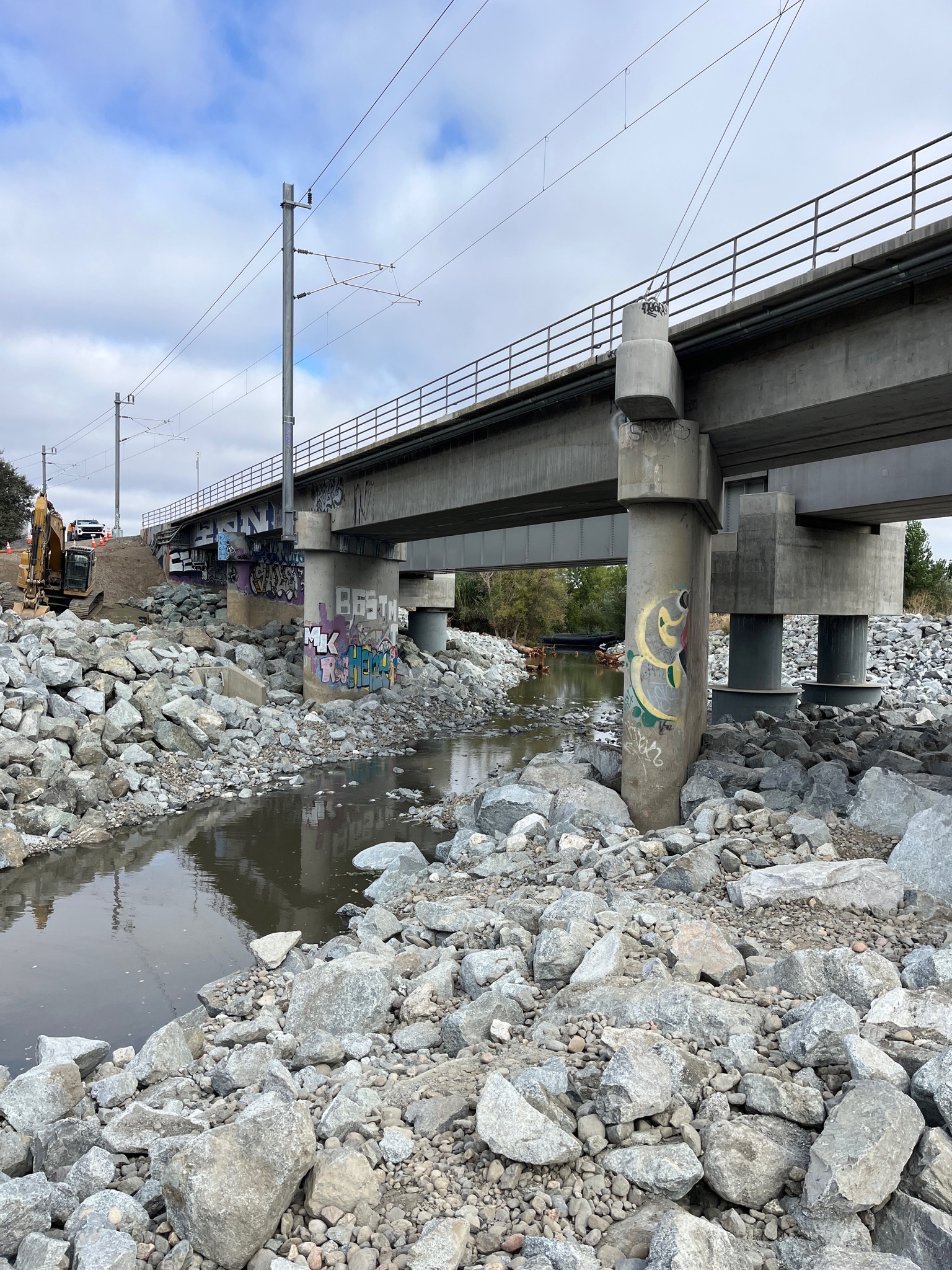
In 2023, construction began to replace the northbound bridge- originally constructed in 1935 - and to extend the southbound bridge that was previously reconstructed in the 1990s. During construction, deliberate steps were taken to ensure the safety of these species were prioritized including:
- protocol level surveys
- pre-construction sweeps to assure any species were relocated and protected from construction activities
- implementation of wildlife exclusion fencing and work buffers to keep species safely out of the construction area
- full-time biological monitoring during construction
- implementation of spill-prevention and clean up measures to prevent the contamination of the creek
- water testing
State and federal regulations require all construction that would affect the river to take place during the dry season, which falls from June 15 to October 15. Prior to the start of in-channel work, Caltrain installed fish exclusion nets upstream and downstream of the section of the channel that required dewatering to support construction. Fisheries biologists relocated fish from the project area using various approved capture methods. River water was safely diverted around the construction activities in the dried channel using unscreened pipes, which allowed aquatic species to pass through the project area.
Now that the project is completed, the channel is wider, and the channel bottom has been enhanced with various streambed features that will improve the aquatic habitat and conditions for migrating and spawning fish. The streambanks were stabilized, reducing the potential for erosion and making the river more capable of supporting a 100-year flood. Native vegetation was planted along portions of the banks in order to create riparian habitats. Two bio-retention/infiltration areas were constructed, which will trap rainwater so sediment can be removed before entering the water and threatening fish species. Crews also took the opportunity to remove trash, graffiti, and invasive plants in and around the river.
Caltrain will also provide additional mitigation as part of this project. In addition to the habitat improvement in the immediate area around the bridge, Caltrain has identified a portion of Hicks Creek in Midpeninsula Regional Open Space Sierra Azul Open Space Reserve in Santa Clara County, as an off-site mitigation project. The mitigation project will remove man-made concrete barriers currently inhibiting fish passage within the creek, regrade the creekbanks back to more natural slopes, and construct step-pools to help fish move through the area when water flow is low, and add channel complexity to allow for greater biodiversity. Invasive plants will be replaced by native plants, further reducing erosion and stabilizing creek banks and improving the local habitat. Hicks Creek is an upland tributary to the Guadalupe River, so improvements at the creek, expand the improvements Caltrain is implementing near the rail bridges for aquatic species that migrate up the Guadalupe River, including steelhead.
Sustainability is one of Caltrain’s core values, and at Caltrain we show our commitment to our values not with words but with action. The Guadalupe River Bridge Replacement Project is a project that required a great deal of collaboration between public agencies at all levels, because the environment affected by it is delicate, complex and multi-faceted. Doing this project right meant taking the time to protect the species living in the project footprint and doing the necessary due diligence to determine the impact of construction and to then either mitigate it or relocate the animals affected. Now that construction on and around the bridge is complete, we are proud of the work we’ve done to effectively steward the environment in which we operate, and we look forward to offering the community a newly revitalized Guadalupe River for decades to come.