San Jose Diridon construction Oct. 19 - Dec. Follow posted signs and check monitors for track assignment changes. More info.
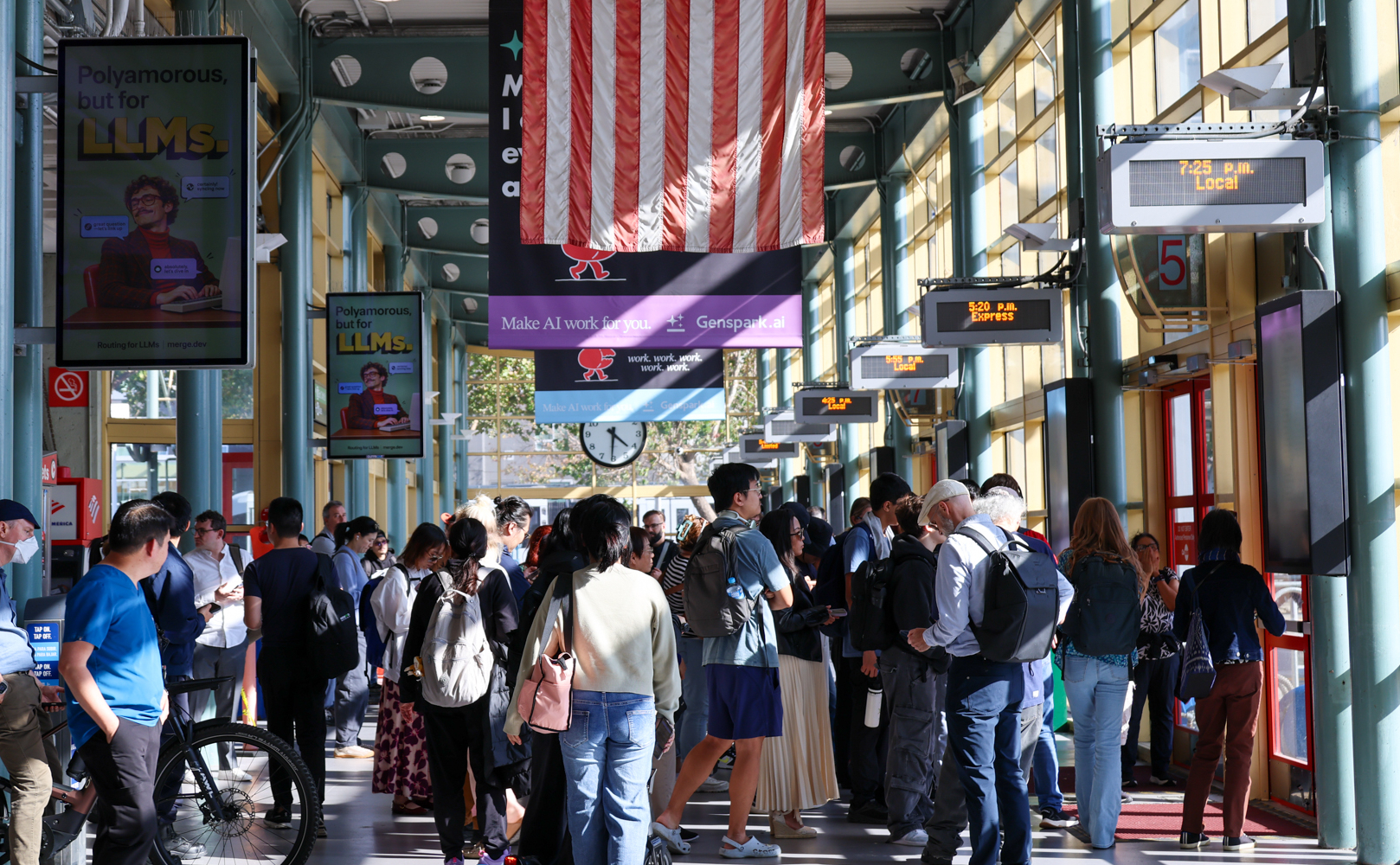
Caltrain announced its average weekend ridership in fiscal year 2026 is now about 50% higher than in 2019, while weekday ridership continues to close the gap toward full recovery. The increase in ridership follows the launch of its new high-performance electric trains in September 2024 that offer a better experience for Caltrain riders and provide faster and more frequent service.
Caltrain has one of the fastest-growing ridership levels of any transit agency in the country. Since electrification, Caltrain more than doubled its weekend train schedule, growing from 32 trains a day to 66, while ensuring riders a faster, quieter, more comfortable way to get around the Bay Area.
Average weekend ridership across the system reached 21,210 riders in fiscal year 2026, up 40.6% from the fiscal year prior. July alone brought a new high of 1.32 million total monthly riders and a record 32,000 average passengers on Saturdays.
San Francisco Station led the way, with weekend ridership jumping 41% compared to the previous fiscal year. 22nd Street saw the sharpest growth of any station, up 59%, and stations from Santa Clara to Mountain View saw similar increases. South San Francisco, Hayward Park, Lawrence and Santa Clara stations’ current weekday ridership has already surpassed 2019 levels.
Weekday ridership is showing the same kind of momentum. Average weekday ridership for fiscal year 2026 climbed to 40,800, up 37.5% from the year before, and June 2026 brought the highest average weekday ridership of the fiscal year at 48,856 riders. Total ridership across the system reached 12.6 million for fiscal year 2026, up 37.6% compared with the previous year. Weekday ridership ended fiscal 2026 at 81.6% of 2019 levels. San Francisco Station again led weekday ridership, with mid-week ridership up 41% to 9,714 average riders
While Caltrain continues its strong ridership growth, transit agencies across the Bay Area are confronting structural budget shortfalls as work from home patterns continue to reshape commuting behavior. Caltrain has responded on three fronts: cutting costs, monetizing resources, and adapting service to attract more riders.
The Caltrain Board has adopted a framework if no additional external funding is available which includes potentially closing more than a third of stations, eliminating all weekend service, reducing train frequency to once an hour, eliminating special event service, ending service by 9 p.m. and cutting segments of services. These measures would not be undertaken lightly and would jeopardize the progress made by Caltrain in bolstering ridership levels.
“Our riders felt the benefits of electrification from day one, and two years later, their feedback confirms that those improvements have transformed the Caltrain experience,” said Caltrain Executive Director Michelle Bouchard. “These exceptional satisfaction ratings reflect the dedication of our entire team — from conductors, engineers, and maintenance crews to customer service staff — who deliver great service every day of the week. We are proud to connect the communities we serve with reliable, modernized service that more people are choosing to ride every day.”
Caltrain's electric fleet is currently being outfitted with automated passenger counters above every door, a system that will eventually give the railroad more precise ridership data than ever before. Caltrain will also keep tracking demand tied to special events along the corridor, including a new women's professional hockey team headed to San Jose and newly approved concerts at PayPal Park.
###
About Caltrain: Owned and operated by the Peninsula Corridor Joint Powers Board, Caltrain provides rail service from San Francisco to San Jose, with commute service to Gilroy. Serving the region since 1863, Caltrain is the oldest continually operating rail system west of the Mississippi and the first railroad to convert from diesel to electric power in a generation.
Like us on Facebook at www.caltrain.com and follow on X @Caltrain.
Free translation assistance is available.
Para traducción llame al 1.800.660.4287; 如需翻譯,請電 1.800.660.4287.